
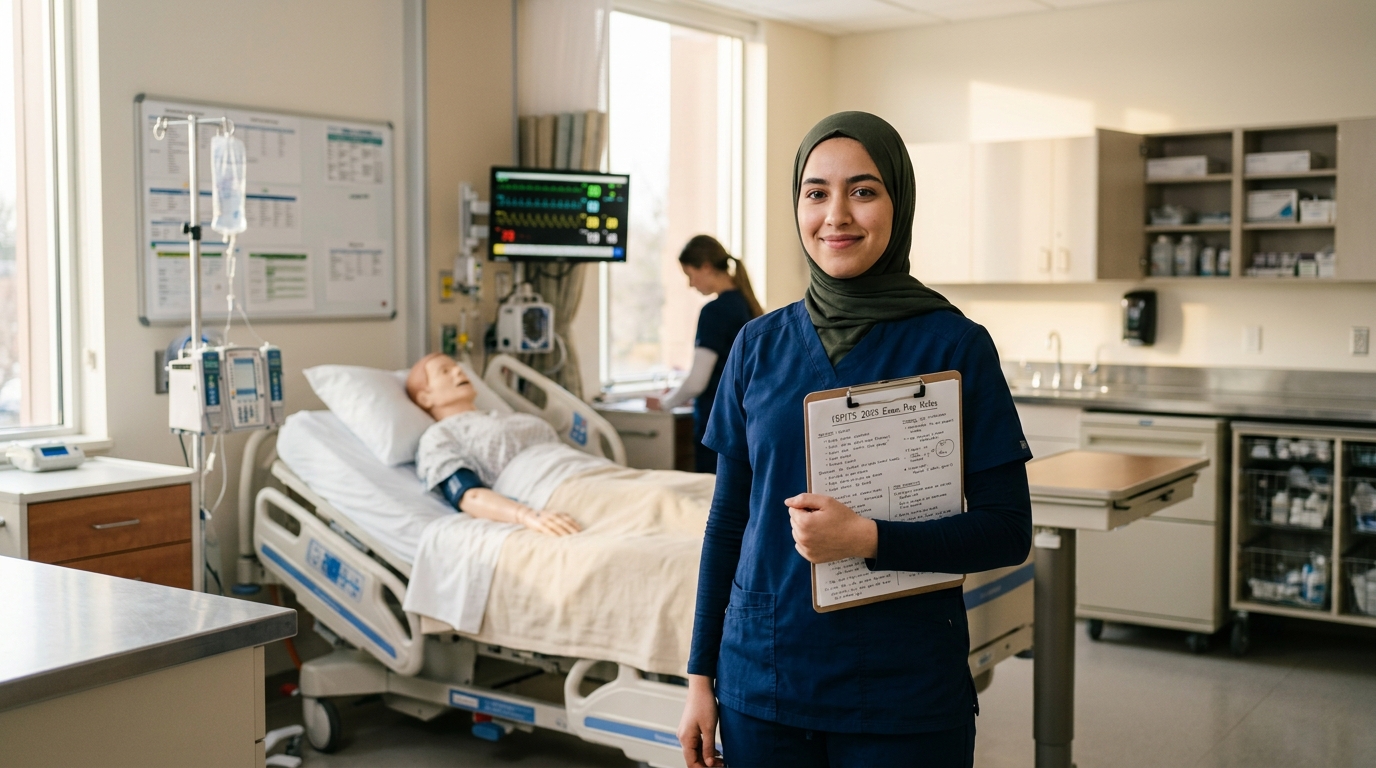
Le concours ISPITS 2026 comporte 40 QCM repartis sur 4 matieres : biologie, chimie, physique et francais. Notre archive de 724 questions couvrant les annales de 2001 a 2021 revele que pres de 60% des QCM de biologie portent sur la reproduction, l'immunologie et la genetique. Ce guide vous donne les cles pour cibler votre revision et maximiser vos chances de reussite.
Sommaire
Qu'est-ce que l'ISPITS ?
L'ISPITS - Institut Superieur des Professions Infirmieres et Techniques de Sante - est l'un des etablissements les plus demandes par les bacheliers scientifiques au Maroc. Et pour cause : il ouvre la porte a des carrieres stables et valorisantes dans le domaine de la sante.
Concretement, l'ISPITS forme des professionnels dans plusieurs filieres :
- Soins infirmiers : infirmiers polyvalents, infirmiers en anesthesie-reanimation
- Sage-femme : accompagnement de la grossesse et de l'accouchement
- Kinesitherapie : reeducation fonctionnelle et readaptation
- Techniques de sante : laboratoire, radiologie, hygiene du milieu
- Assistance sociale : prise en charge medico-sociale
Apres 3 ans de formation, les diplomes integrent directement le systeme de sante publique ou prive. Le taux d'insertion professionnelle est parmi les meilleurs de toutes les formations post-bac au Maroc. C'est un fait que peu de gens mentionnent.
L'acces se fait via un concours national ouvert aux titulaires du Baccalaureat scientifique (Sciences de la Vie et de la Terre, ou Sciences Physiques). Chaque annee, des milliers de candidats postulent pour quelques centaines de places. La competition est rude, mais avec une preparation structuree, les chances sont reelles.
La section Francais : les points les plus faciles a gagner
Beaucoup de candidats concentrent toute leur energie sur la biologie et la chimie. C'est comprehensible. Mais voici une realite que la plupart ignorent : la section francais est souvent la plus facile a scorer. Et pourtant, c'est celle qu'on revise le moins.
Les questions de francais au concours ISPITS portent principalement sur :
- La grammaire : conjugaison, accords, syntaxe
- Le vocabulaire : synonymes, antonymes, sens contextuel
- La comprehension de texte : extraire l'idee principale, identifier le ton
- L'orthographe : pieges classiques, homophones
Honnement ? La majorite de ces notions sont du programme de college et lycee. Pas besoin d'apprendre des concepts nouveaux. Il suffit de reviser ce que vous savez deja, et surtout de vous entrainer sur des QCM reels.
❓ Question de pratique - Francais
Dans la phrase « Les infirmiers ____ les patients avec soin », quelle est la forme correcte du verbe « soigner » au present de l'indicatif ?
- soigne
- soignent
- soignes
- soignons
Les 4 matieres du concours ISPITS
Le concours ISPITS se compose de 40 QCM au total, repartis equitablement entre 4 matieres. Mais attention : les coefficients ne sont pas les memes pour toutes les matieres. C'est un detail qui change tout.
| Matiere | Nombre de QCM | Coefficient | Programme |
|---|---|---|---|
| Biologie (SVT) | 10 | 2 | Tronc commun + 1ere + 2e Bac SVT |
| Chimie | 10 | 2 | Tronc commun + 1ere + 2e Bac |
| Physique | 10 | 2 | Tronc commun + 1ere + 2e Bac |
| Francais | 10 | 1 | Grammaire, vocabulaire, comprehension |
Le format est exclusivement des QCM a choix unique (QCU). Pas de questions ouvertes, pas de redaction. Chaque question propose 4 options, et une seule est correcte. Les reponses fausses ne sont generalement pas penalisees, donc ne laissez jamais une question sans reponse.
Themes recurrents en biologie : ce qui tombe le plus souvent
Voici le secret que personne ne vous dit : en analysant les 21 annees d'annales ISPITS (2001 a 2021), on constate que certains themes reviennent chaque annee de maniere quasi systematique. Connaitre ces themes, c'est deja avoir un plan de revision efficace.
| Theme | Frequence | Chapitres cles |
|---|---|---|
| Reproduction humaine | ~25% | Gametes, fecondation, grossesse, contraception |
| Immunologie | ~20% | Reponse immunitaire, vaccins, serotherapie, VIH |
| Genetique | ~15% | Brassage genetique, heredite, mutations, caryotype |
| Ecologie | ~10% | Ecosystemes, chaines alimentaires, flux d'energie |
| Geologie | ~10% | Tectonique des plaques, roches, fossiles |
| Biologie cellulaire | ~10% | Mitose, meiose, structures cellulaires |
| Autres | ~10% | Nutrition, circulation, respiration, systeme nerveux |
Autrement dit, si vous maitrisez la reproduction, l'immunologie et la genetique, vous couvrez deja environ 60% des questions de biologie. C'est enorme. Et ca veut dire que votre revision peut etre tres ciblee.
❓ Question de pratique - Biologie (Meiose)
Lors de la meiose, a quel stade se produit le brassage interchromosomique ?
- Prophase I
- Metaphase I
- Anaphase I
- Telophase II
L'archive de 21 ans d'annales ISPITS (2001-2021)
Sur FMPrepa, nous avons compile 724 questions issues des annales du concours ISPITS, couvrant une periode de 21 ans (2001 a 2021). Chaque question est accompagnee de sa correction detaillee. Et tout est 100% gratuit.
Pourquoi travailler sur les annales est si important ? Trois raisons principales :
1. Identifier les patterns
En faisant les annales chronologiquement, vous remarquerez que certaines questions reviennent presque a l'identique d'une annee sur l'autre. Les examinateurs puisent souvent dans le meme pool de concepts. Reperer ces recurrences, c'est se donner un avantage considerable. Consultez aussi notre guide des annales de concours au Maroc pour une approche plus globale.
2. Gerer le temps
Le concours est chronometre. En vous entrainant sur des conditions reelles (40 QCM en temps limite), vous apprenez a doser votre rythme. Les premiers essais seront frustrants. Puis vous trouverez votre vitesse.
3. Auto-evaluation honnete
Chaque session d'annales vous donne un score. Pas de triche possible. Si vous avez 12/40, vous savez ou vous en etes. Si vous montez a 28/40 apres 3 semaines, vous voyez la progression. C'est motivant et concret.
« Le concours ISPITS n'est pas un sprint, c'est une course strategique. Celui qui connait les annales a deja un avantage enorme. »
- Pr. Fatima Z., enseignante en SVT"Grace aux annales ISPITS sur FMPrepa, j'ai pu identifier les themes qui reviennent chaque annee. En 3 semaines de preparation ciblee, j'ai reussi le concours avec une note bien au-dessus de la moyenne. Les corrections detaillees m'ont vraiment aidee a comprendre mes erreurs."
"Je pensais que le francais serait ma matiere faible, mais les QCM d'entrainement m'ont permis de gagner des points precieux. Les annales corrigees sont un tresor pour quiconque prepare l'ISPITS. Et le fait que ce soit gratuit, ca change tout."
✔ Avantages des annales FMPrepa
- 724 questions reelles d'examens passes
- Corrections detaillees pour chaque reponse
- Couvre 21 annees completes (2001-2021)
- 100% gratuit, aucun abonnement requis
✘ Points d'attention
- Certaines annales anciennes (avant 2010) ont un programme legerement different
- Le programme officiel evolue : verifiez les mises a jour
- Pas de cours theoriques inclus (uniquement QCM)
QCM d'entrainement et plan de revision
Avoir 724 QCM a disposition, c'est bien. Savoir comment les utiliser, c'est mieux. Voici un plan de revision sur 4 a 6 semaines qui a fait ses preuves aupres des candidats ISPITS.
Semaine 1-2 : Diagnostic et bases
Commencez par faire une session complete d'annales sans revision prealable. Notez votre score. Identifiez vos points faibles par matiere. Ensuite, revisez les cours sur vos lacunes les plus flagrantes en parallele des QCM.
Semaine 3-4 : Renforcement cible
Concentrez-vous sur les themes les plus frequents en biologie (reproduction, immunologie, genetique). Faites 2 a 3 sessions d'annales par semaine. Analysez chaque erreur avec les corrections detaillees.
Semaine 5-6 : Conditions d'examen
Simulez le concours en conditions reelles : 40 QCM, temps limite, pas de documents. Faites au moins 3 simulations completes. Votre objectif : atteindre un score stable au-dessus de 28/40. Pour un planning encore plus detaille, consultez notre guide walkthrough complet des concours 2026.
- 40 QCM au total : 10 bio (coeff 2), 10 chimie (coeff 2), 10 physique (coeff 2), 10 francais (coeff 1)
- En biologie, 60% des questions portent sur la reproduction, l'immunologie et la genetique
- Le francais est souvent la matiere la plus facile a scorer : ne le negligez pas
- 724 QCM d'annales (2001-2021) sont disponibles gratuitement sur FMPrepa
- Un plan de 4 a 6 semaines avec 30 min/jour de QCM est suffisant pour une bonne preparation
- Analysez chaque erreur avec les corrections detaillees pour progresser rapidement
Pret a preparer le concours ISPITS 2026 ?
Accede gratuitement a 724 QCM ISPITS corriges et a des milliers d'autres questions sur FMPrepa. 100% gratuit, pour toujours.
Commencer a reviser